The Most Overlooked Column in Genealogy — and Why It Can Unlock Generations
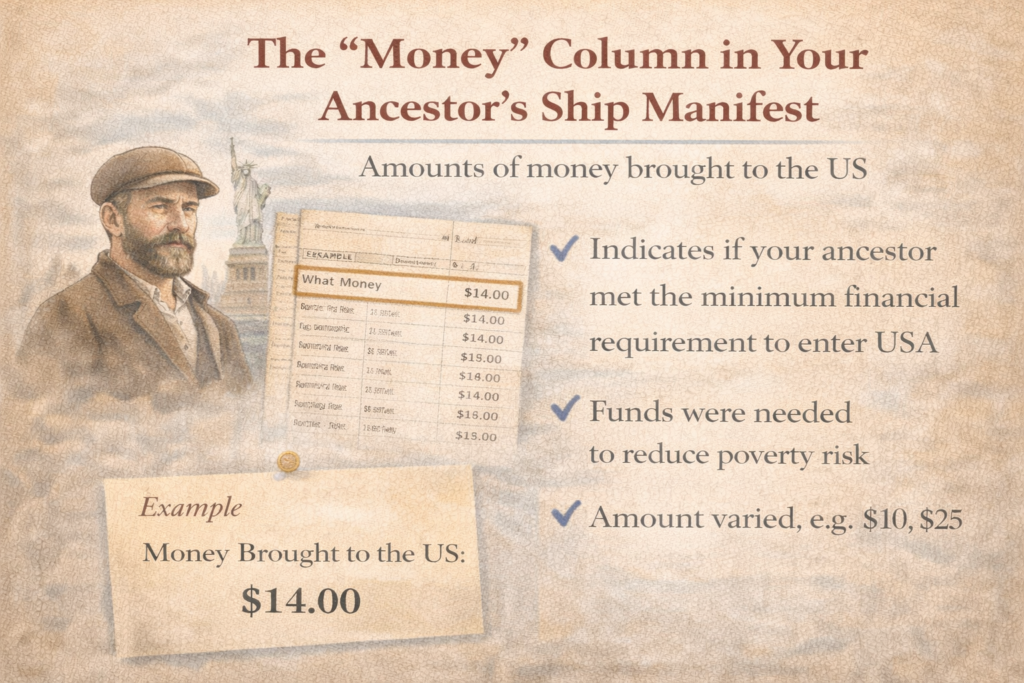
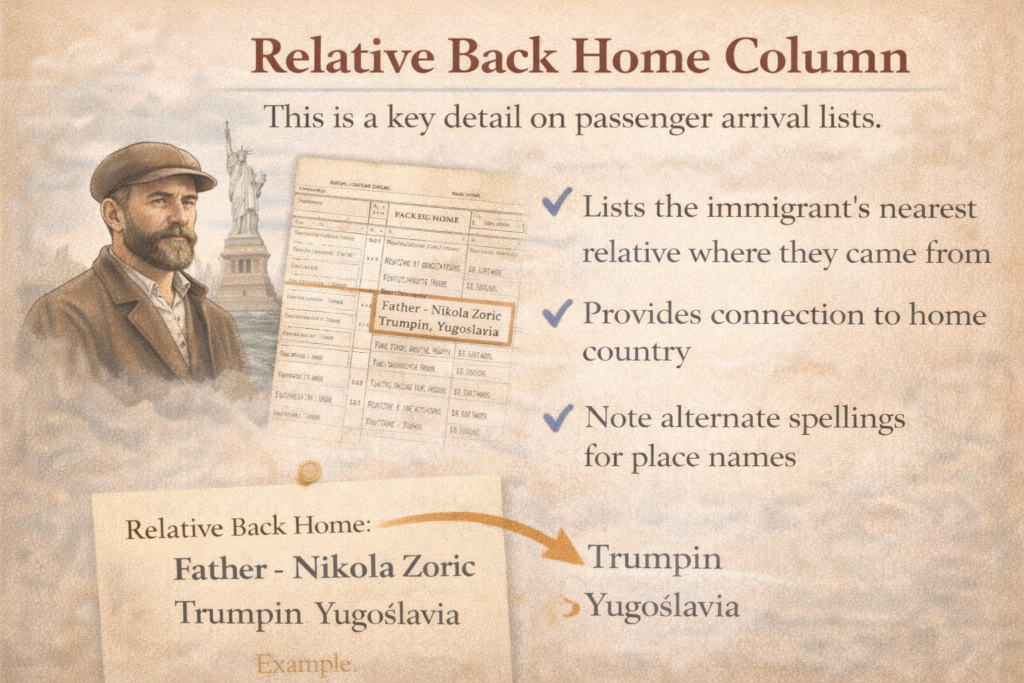
On the right-hand page of a 1907 or later Ellis Island manifest, buried among columns about money and health and criminal history, sits a field that most researchers scroll past without realizing what they’re looking at. It asks for the name and complete address of the immigrant’s nearest living relative in the country they just left. A mother in a village in Poland. A father on a farm in Sicily. A sister in a town in Lithuania. It is the most powerful field in the history of American immigration records — and it is sitting in your ancestor’s manifest right now, waiting to be found.
Why This Column Exists
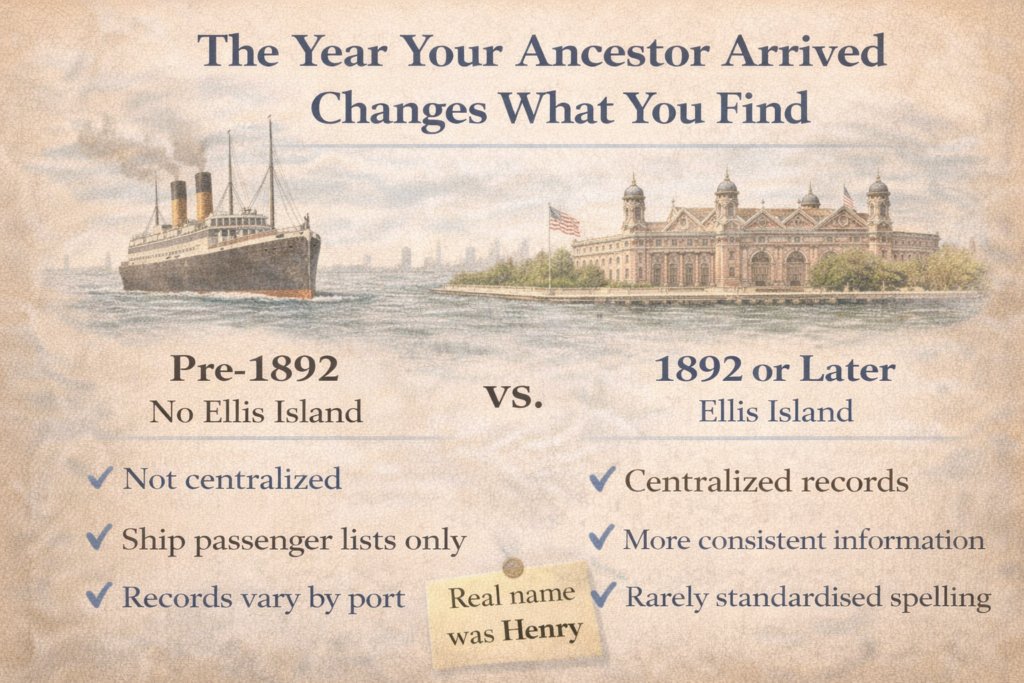
The nearest-relative-back-home column was added to ship manifests in 1907, when the federal government expanded its screening questions from 22 to 29. The original purpose was bureaucratic — immigration officials wanted to know who could be notified if an immigrant was detained, deported, or died. It was a practical question about liability and communication, not a genealogical gift.
But the unintended consequence of that practical question is extraordinary. For every immigrant who arrived between 1907 and the mid-1920s, there is an American government document that names a specific person still living in a specific village in Europe — with enough address detail to locate them in European records.
What the Column Actually Contains
The field typically records the relative’s name, their relationship to the immigrant, and their address — usually a village or town name, sometimes a street. The relationship column tells you whether this is a parent, a sibling, a spouse, or another relative. The address tells you the specific geographic location to search in European records.
This matters enormously because the single hardest problem in immigrant genealogy is identifying the specific town of origin. Country of origin is almost always recorded somewhere in American records. But a country is not searchable — you cannot go to Italy and find your ancestor’s family. A village is searchable. Church records, civil registration, land records, and military conscription lists are organized by locality. The village name is the key that unlocks all of them.
Where to Find It on the Manifest
This is critical — and the reason so many researchers miss it. The post-1907 manifest is a two-page document. The left page records the passenger’s name, age, occupation, destination in America, and the contact they were going to join. The right page records the screening questions — health, money, criminal history, and the relative back home.
Most genealogy databases index only the left page fields. The name is indexed. The age is indexed. The US destination contact is indexed. But the relative back home, recorded on the right page, is frequently not indexed at all — meaning it will never appear in a search result. You have to find the record through other fields and then specifically look at the full image of both pages.
When you find your ancestor in a passenger database, do not stop at the indexed information. Click through to the full manifest image. Scroll to the right page. Find the column headed something like “Name and complete address of nearest relative or friend in country whence alien came.” That is where the village is.
A Whole Family Hiding in One Field
Sometimes the relative column contains even more than expected. An immigrant might list their mother — giving you a maternal name that appears nowhere in American records because she never came. Or they might list a sibling, confirming that a brother or sister remained in the old country and potentially started a line of the family that is still there today.
In some cases researchers have used the relative back home column to find living cousins in Europe — descendants of the sibling who stayed, identified through a name in a 1910 ship manifest and traced forward through a century of European records. The manifest connects not just to the past but potentially to living family members the American branch never knew existed.
When the Column Lets You Down
Not every relative column is a gold mine. Some immigrants listed “none” — particularly those who had already lost family to illness, poverty, or earlier emigration. Some gave only a country with no village detail. Some gave a village name that has since changed, been absorbed into a larger town, or sits in a region where records were destroyed in the wars that followed the immigration era.
And some simply gave vague or incorrect information — either because they misunderstood the question, because they didn’t want the government to know who was back home, or because the inspector wrote down an approximation of what they said rather than the exact name. Village names transliterated from Cyrillic or Hungarian or Polish into the phonetic guesses of an American clerk can require careful work to identify correctly.
When you find a village name in the relative column, search for it in its original language first — not the anglicized spelling the clerk wrote. A village recorded as “Krakoff” might be Kraków, or it might be one of dozens of smaller villages with similar names. Use a historical gazetteer for the relevant country to identify the most likely match. The JewishGen Communities Database and the Meyers Gazetteer of the German Empire are particularly useful for their respective regions.
The Page You Must Turn
Every researcher who has a 1907 or later ancestor and hasn’t looked at the right page of the manifest is sitting one click away from potentially the most important genealogical discovery they will ever make.
A name. A relationship. A village. Written down on the day your ancestor walked through the doors of Ellis Island and into America. The last official record of the world they left behind — and a direct address into the records of that world, waiting for you to find it.
Turn the page.
Find out what columns your ancestor’s manifest contains
Our Ship Manifest Column Decoder shows every field recorded in each era of immigration — including exactly where the relative-back-home column appears and what it typically contains.