Why 1924 Changed Everything — The Law That Closed the Door on Millions of Families
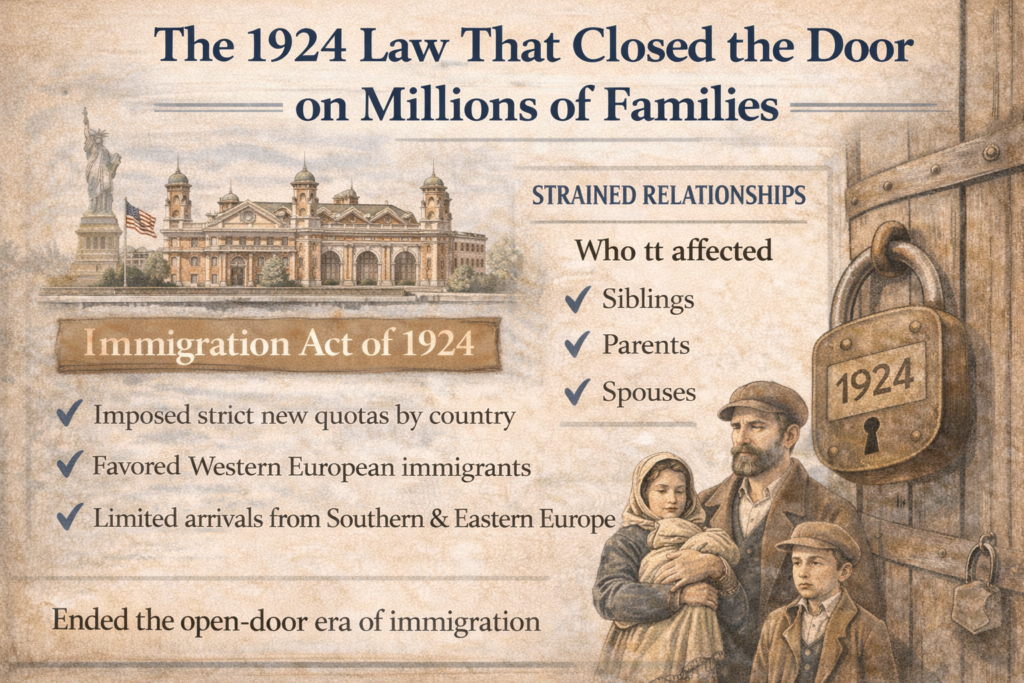
On July 1, 1924, a new American immigration law took effect. Within months, the great tide of immigration that had brought twelve million people through Ellis Island over three decades slowed to a fraction of its former volume. Families that had been planning to follow relatives already in America found themselves locked out. Brothers and sisters who had expected to reunite in New York spent the rest of their lives on opposite sides of an ocean. Understanding what happened in 1924 — and why — is essential for anyone whose immigrant ancestor arrived near that date, or whose family was separated by it.
The World Before 1924
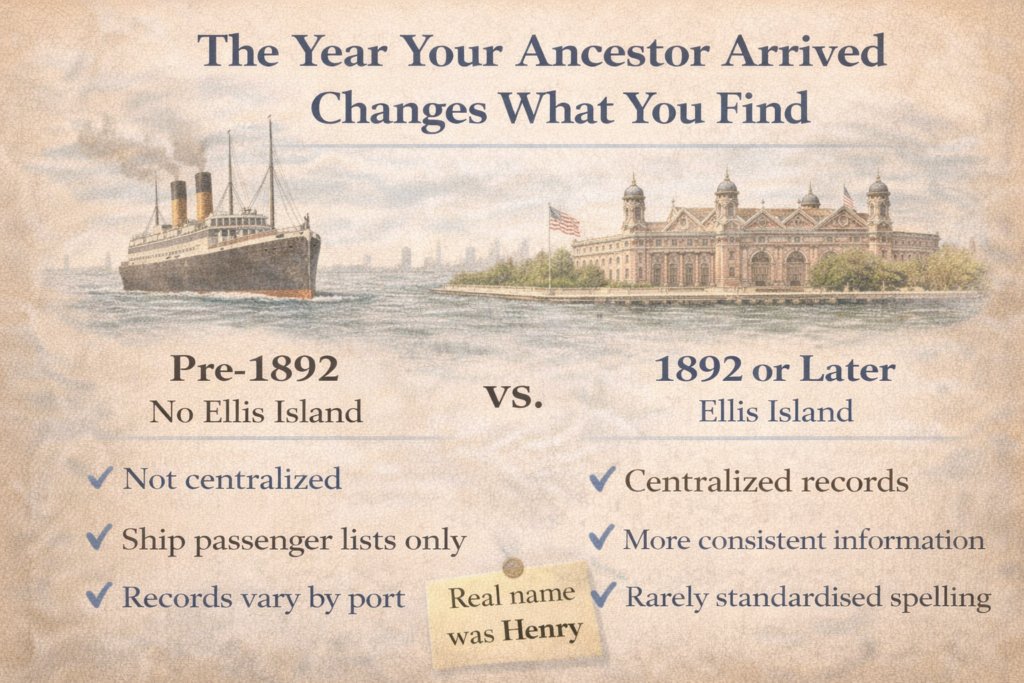
From the 1880s through the early 1920s, immigration to America operated on a largely open basis for Europeans. There were exclusions — people with certain diseases, criminals, those deemed likely to become public charges, and from 1882 onward, Chinese immigrants under the Chinese Exclusion Act. But for Europeans, the primary requirement was passing the health inspection and demonstrating basic financial capacity. If you could get on a ship and pass the screening, you could come.
The result was the largest voluntary human migration in history. Italians, Poles, Jews, Greeks, Slavs, Hungarians, Lithuanians — people from across Southern and Eastern Europe poured through American ports at a rate that peaked at over a million arrivals in 1907 alone. The country was absorbing an enormous transformation, and not everyone was comfortable with it.
The Quota Acts — What They Did
The Emergency Quota Act of 1921 was the first major restriction, capping immigration from any country at three percent of the number of people from that country already living in the US as of the 1910 census. This immediately reduced immigration from Southern and Eastern Europe, whose populations were smaller in the 1910 census than those of Northern and Western Europe.
The Immigration Act of 1924 — also called the Johnson-Reed Act — went further. It reduced the quota to two percent and moved the baseline year back to 1890, before the great wave of Southern and Eastern European immigration had fully registered in census figures. The practical effect was severe. Italy’s annual quota dropped from over 42,000 to under 4,000. Poland’s dropped from over 30,000 to around 5,000. Romania’s fell to 603. Greece’s fell to 100.
The Families It Separated
The quota system created a specific and devastating genealogical pattern: the divided family. One sibling arrived in 1920, sponsored the others, and waited. The 1924 act passed before the others could come. The quota for their country filled within weeks of the new year each year. Applications went into a queue. Years passed. The Depression came. The Second World War came. The Iron Curtain came down.
Families that expected to be separated for a year or two were separated for a generation. In some cases, the European branch of a family disappeared entirely in the Holocaust, in the Soviet purges, in the upheavals of the mid-twentieth century — and the American branch didn’t know, couldn’t know, because communication was difficult and then the war made it impossible.
If your family has a story about relatives who were “supposed to come” but never did, 1924 is almost certainly part of that story.
What This Means for Your Research
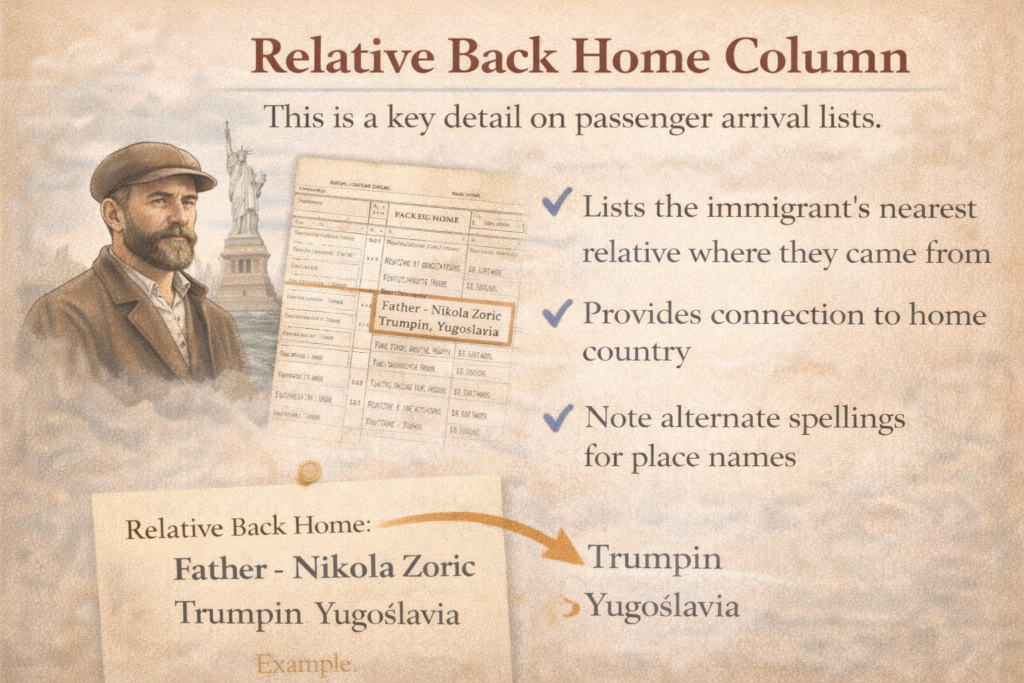
For genealogical research, 1924 creates a hard boundary in the records. Before 1924, immigration was the normal path for family members joining relatives in America, and the passenger lists are full of people in their teens and twenties making the crossing to join parents or siblings already established. After 1924, that flow largely stopped, and the records that document family connections across the Atlantic shift from ship manifests to the naturalization process and to correspondence.
The 1924 act also created visa records. From July 1, 1924, every immigrant needed a visa issued at an American consulate in their home country before they could board a ship. The visa application is a separate record from the ship manifest — filed in the country of origin, not in America — and it sometimes contains information not found anywhere in US records, including a photograph of the applicant taken at the consulate.
After 1924 — Different Records, Different Research
Immigrants who arrived after 1924 have a different documentary trail than those who came before. The naturalization records for post-1924 immigrants are more standardized and often more detailed, including the certificate of arrival that links the naturalization to the specific ship and date of crossing. The visa number that appears on post-1924 manifests connects to State Department records that may be accessible through the National Archives.
For families researching ancestors who arrived in the late 1920s or 1930s, the Depression-era records are also worth exploring. Some immigrants who arrived during this period struggled economically and interacted with relief agencies, employment bureaus, and social welfare organizations that kept their own records — records that sometimes contain detailed personal information not found in any government document.
If your ancestor arrived between 1924 and the 1950s, look for their visa application in the records of the American consulate in their country of origin. These records are held by the National Archives and some have been digitized. The visa application typically includes the applicant’s full name, birthplace, occupation, physical description, and a passport-style photograph — making it one of the most personal documents your ancestor ever generated.
The Door That Stayed Closed
Ellis Island processed its last significant wave of immigrants in the early 1920s. After 1924, the great building that had welcomed twelve million people fell quiet. It continued operating in a reduced capacity for decades — as a detention facility, as a processing center for the reduced number of immigrants who came within the quotas — but the era it represented was over.
The quotas established in 1924 remained largely in place until 1965, when the Immigration and Nationality Act abolished the national origins system entirely. By then, four decades of families had grown up with ocean between their American and European branches — a separation that the internet age has only recently begun to bridge, one DNA test and one genealogy search at a time.
See what records your ancestor’s arrival era generated
Our Ship Manifest Column Decoder covers every era of immigration records from before 1820 to the post-1924 visa era — showing you exactly what was recorded and how to use it for your research.