Census Records · 6 min read
Why Does My Ancestor Have a Different Age in Every Census?
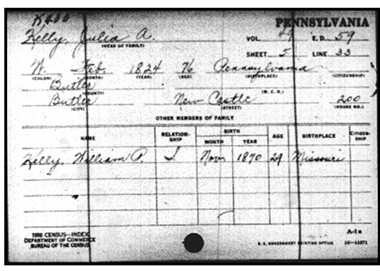
You find your great-great-grandmother in the 1880 census aged 34. In 1900 she’s listed as 48. In 1910 she’s 55. The maths doesn’t add up — and you’re not going mad. This is one of the most common frustrations in genealogy research, and there’s a very human explanation for it.
Nobody Was Counting Their Birthdays
For most of the nineteenth century, ordinary working people did not track their age the way we do today. Birthdays were not widely celebrated. There were no birthday cards, no parties, no annual reminder that another year had passed. Age was simply not something people thought about very often.
For immigrant families especially, the chaos of leaving one country, surviving a sea crossing, and building a new life in a strange land left little room for maintaining precise personal records. Many people genuinely did not know their exact birth year. They knew roughly how old they were — but roughly was good enough for daily life.
The Enumerator at the Door
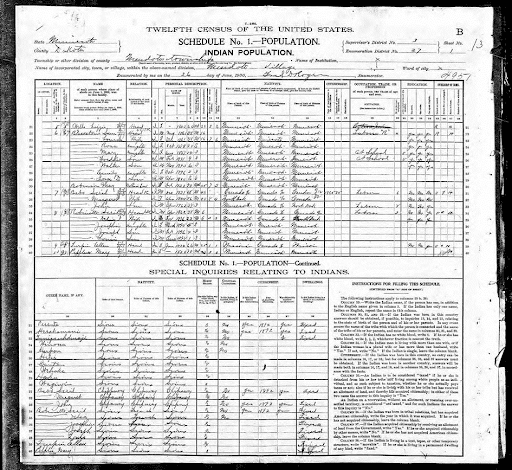
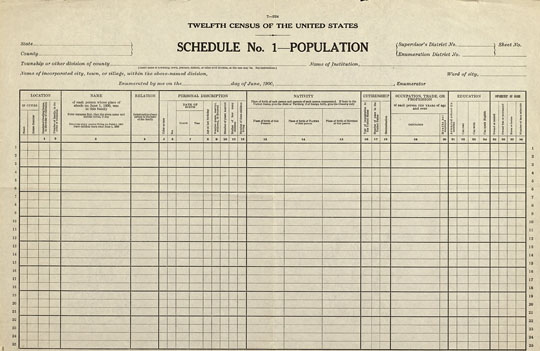
Understanding who collected the census data is key to understanding why it contains so many errors. Census enumerators were not trained government officials. They were ordinary local men — teachers, clerks, tradespeople — hired temporarily and paid a small fee for each household they recorded. They walked door to door, in all weathers, often covering miles of ground in a single day.
When an enumerator knocked on the door, he rarely spoke to the person whose age he was recording. He spoke to whoever answered — often the head of household, a neighbour, or a child. He asked how old everyone in the household was, wrote down what he was told, and moved on to the next house. There was no verification. No one checked his work until it was far too late to correct anything.
The age recorded in the census is not your ancestor’s age. It is the age that someone in the household told a stranger on the doorstep — often from memory, often estimated, and often wrong.
Why Ages Were Rounded to the Nearest Five
When people were uncertain of their age — and many were — they naturally rounded. Someone who thought they were probably about 43 would say 40 or 45. This tendency to round to numbers ending in 0 or 5 is so well documented that genealogists call it “age heaping.” If you find your ancestor listed as 40, 45, or 50, treat that age with particular scepticism.
Age heaping was especially common among immigrants, older adults, and anyone who had grown up in a community without formal record-keeping. It was not dishonesty — it was simply the best answer available.
Women and the Art of Flexible Ageing
Women in the nineteenth and early twentieth centuries had additional reasons to misreport their age. Older women sometimes shaved years off to appear more youthful. Younger women sometimes added years to appear more marriageable or more established. Widows sometimes adjusted their age to match that of a new husband.
It was also common for women to report a different age in each census simply because a different family member gave the information each time. A husband who didn’t know his wife’s exact birth year might give a slightly different estimate in 1880 than in 1900.
Immigration, Calendars, and Lost Records
For immigrant families, the problem runs even deeper. Many came from countries using different calendar systems — the Julian calendar, used in Russia and parts of Eastern Europe, ran thirteen days behind the Gregorian calendar used in the West. A person born on what their village recorded as January 1st might find that date recorded differently depending on which calendar system the clerk was using.
Beyond calendars, many immigrants came from regions where civil birth registration simply did not exist, or where records were kept by churches that were later destroyed in war, fire, or political upheaval. If your ancestor’s birth was never formally recorded, there was no document to correct the census enumerator with — even if they had wanted to.
Research tip
When searching census records, never search for an exact age. Always search a range of at least ±5 years from your expected birth year. For immigrant ancestors, extend that to ±7 or even ±10 years. The person you are looking for may be listed just a few years older or younger than you expect.
Using Age Discrepancies as Evidence
Here is the thing that surprises many researchers: the age differences across censuses are not just obstacles — they are evidence. When you plot your ancestor’s reported ages across multiple census years, patterns emerge. A consistent drift in one direction can suggest a deliberate adjustment. A sudden jump can point to a second marriage or a missing record. The inconsistencies tell a story.
Experienced genealogists collect every age their ancestor was ever recorded as, calculate the implied birth year from each one, and look for the cluster. If six different records all point to a birth year somewhere between 1846 and 1852, that cluster is your best estimate — far more reliable than trusting any single record.
What to Do When the Ages Don’t Match
Start by accepting that no single census age is definitive. Cross-reference with other records — death certificates, marriage records, passenger lists, and church baptism registers often give more precise birth information than a census ever could. Death certificates in particular, where the informant was a child or spouse who actually knew the person, can be surprisingly accurate.
Use our Ancestor Census Research Assistant to map out every census year your ancestor should appear in, with an age range that accounts for the typical discrepancy. Then search each year with that range in mind — not a fixed age.
Find every census your ancestor should appear in
Our free tool maps out the full census timeline for your ancestor — with age ranges that account for the typical discrepancy in recorded ages.
Use the Ancestor Census Research Assistant →