Who Were the Census Enumerators — and Why Does It Matter for Your Research?
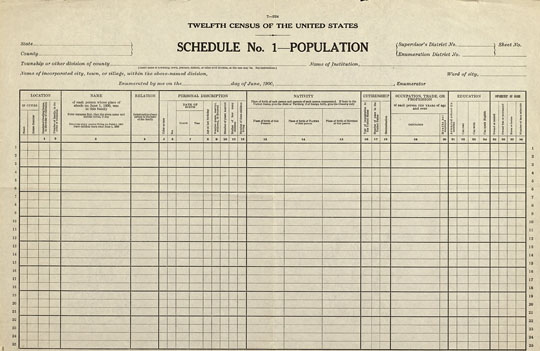
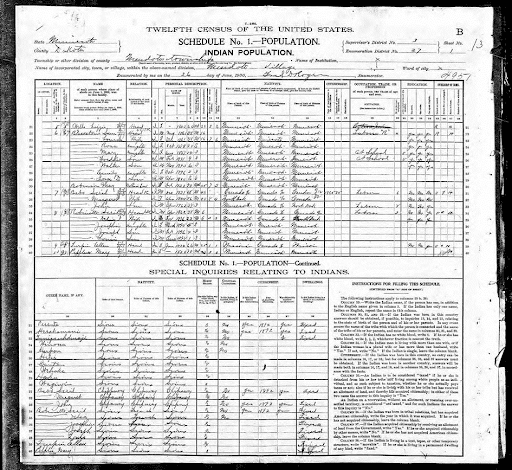
Every name in a US census record was written by hand by a single person — a person who walked to your ancestor’s door, asked a few questions, wrote down what they thought they heard, and moved on to the next house. Understanding who that person was, how they were trained, and what pressures they were under explains almost every error you will ever encounter in census research.
An Ordinary Person With an Extraordinary Job
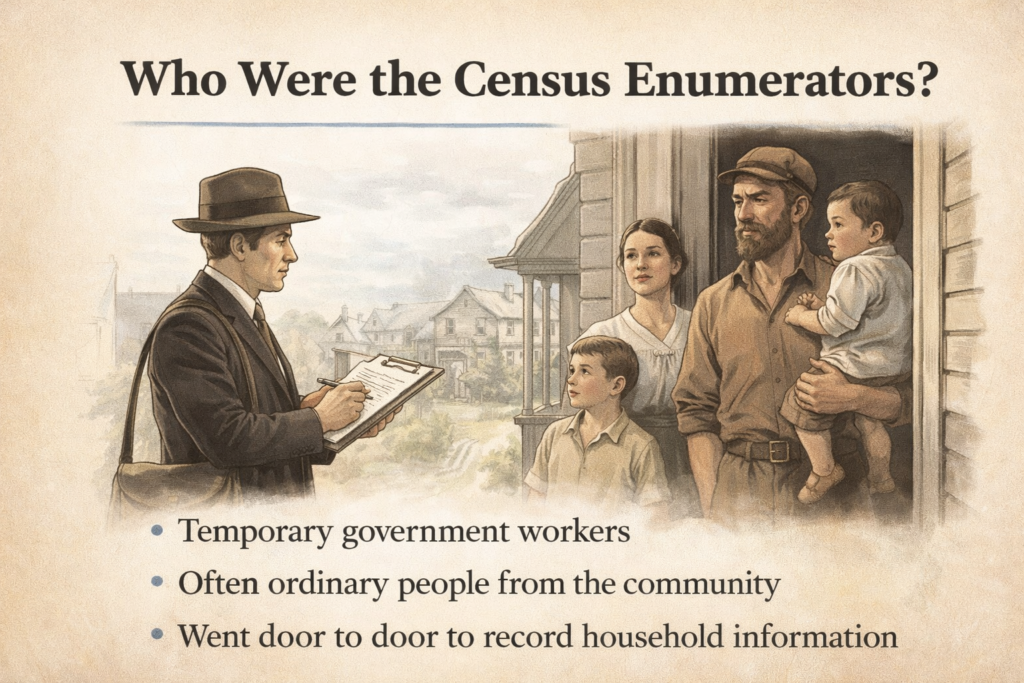
Census enumerators were not professional civil servants or trained record-keepers. They were ordinary members of the local community — often men who had applied for temporary work, been appointed by a local supervisor, and been handed a ledger and a set of instructions. Teachers, shop clerks, local businessmen, and retired tradespeople all served as enumerators across the decades of American census-taking.
The job required literacy, a reasonable knowledge of the local area, and the willingness to walk long distances in all weather. It did not require any knowledge of foreign languages, record-keeping, or the communities being enumerated. In immigrant neighbourhoods — where the majority of residents might speak little or no English — this was a significant problem.
Paid Per Household, Pressured for Speed
Enumerators were paid based on the number of households they recorded, not the quality of their records. In rural areas, this typically meant a set fee per 100 people. In urban areas, the pay structure varied but always rewarded volume over accuracy. An enumerator who spent twenty minutes trying to establish the correct spelling of a Polish surname was losing income. An enumerator who wrote down a best guess and moved on to the next apartment was earning.
The pressure to cover ground quickly was real. An enumerator assigned to a densely populated immigrant district in New York or Chicago might need to record hundreds of households in a single day to complete their district within the allotted time. Under those conditions, careful transcription of unfamiliar names was simply not possible.
The Doorstep Encounter
Picture the moment of enumeration. An enumerator knocks on the door of a tenement apartment. The woman who answers is Italian, or Polish, or Yiddish-speaking, or speaks a dialect of Irish that hasn’t been heard in this part of New York before. The enumerator speaks only English — perhaps with a strong regional accent of his own.
He asks for the names and ages of everyone in the household. She tells him. He writes down what he hears. She cannot see what he is writing. He cannot ask her to spell it — she may not know how to spell her name in the Roman alphabet. He says thank you, notes the apartment number in his ledger, and climbs the stairs to the next floor.
The entire interaction takes perhaps five minutes. The record it produces will be the primary evidence of this family’s existence for the next hundred and twenty years.
Two Accents Colliding on a Doorstep
The accent problem ran in both directions, and this is something many researchers do not fully appreciate. Not only did the immigrant speak English with an accent that the enumerator struggled to understand — the enumerator himself often spoke English with a regional American accent that made him equally hard to understand.
A Boston-accented enumerator asking for names in a neighbourhood of recently arrived Sicilians was not communicating clearly in either direction. The immigrant’s attempt to say their name in English, shaped by Italian phonology, met the enumerator’s attempt to write down an English approximation of what he heard, shaped by his own regional pronunciation of the alphabet. The result was sometimes barely recognisable as the original name.
When the Enumerator Was Also an Immigrant
In some urban districts, local supervisors attempted to assign enumerators who spoke the languages of the community they were covering. A German-speaking enumerator in a German neighbourhood, or a Polish-speaking one in a Polish ward, could in theory produce more accurate records. In practice, this was inconsistent — some districts had enumerators who were themselves recent immigrants with imperfect literacy in English, producing records with different but equally significant errors.
A German-speaking enumerator recording a Polish family might render the name correctly in German orthography — which would then look entirely different from a Polish or English spelling of the same name. The languages were close enough for communication but different enough to create new transcription problems of their own.
What the Enumerator Did Not Record
As important as what enumerators got wrong is what they left out entirely. Lodgers who were not home on enumeration day were sometimes simply not recorded. Households that did not answer the door were marked as empty. In crowded tenements, enumerators sometimes recorded only a fraction of the actual residents — noting a household as containing five people when fifteen were actually living there.
Young children, especially infants, were particularly vulnerable to omission. A tired enumerator at the end of a long day, being told by a father that the household contained himself, his wife, and “the children,” might record only the adults and the children old enough to have names clearly stated. The baby in the back room might not make it into the ledger at all.
When you find your ancestor in a census, always look at the surrounding entries — the households recorded immediately before and after theirs. Enumerators worked street by street, so nearby entries are geographically close. Neighbours you recognise can confirm you have found the right family, and neighbours you do not recognise may be relatives or community members who appear in other records alongside your ancestor.
Why This Matters for Your Research Today
Understanding the enumerator changes how you search. Rather than treating the census as an authoritative record and concluding that a name was spelled a certain way, you treat it as a human document produced under pressure by a single fallible person on a single day. The name might be wrong. The age is probably approximate. The birthplace might be a best guess from a question the respondent barely understood.
This does not make the census less valuable — it makes it more valuable, because you know how to read it. You search with wider parameters. You expect variation. You look for the person rather than the exact record. And when you find them — misspelled, approximate, and imperfectly recorded — you recognise them anyway.
Ready to search the right census years?
Use our Ancestor Census Research Assistant to build a complete timeline of every census your ancestor should appear in — so you know exactly where to look, even when the name isn’t quite right.